Orillia Septic hears the same sentence several times a week: "we had it pumped in the spring and it's backing up again." That sentence is a diagnosis. It means the tank was never the problem.
Pumping and replacement get talked about as if they're two options on a menu. They aren't. They address completely different failures, and the whole question is figuring out which failure you actually have before you spend money on the wrong one.
What pumping is for
A septic tank's job is to separate. Solids settle to the bottom as sludge, grease and light material float to the top as scum, and relatively clear effluent in the middle flows out to the leaching bed, where the soil finishes the treatment. Nothing digests the sludge away completely — it accumulates. That's the whole design.
Pumping removes the accumulated sludge and scum, typically every two to five years depending on tank size and how many people live in the house. A small tank serving a full-time family of five sits at the short end of that range; a larger tank serving a couple sits at the long end.
The reason to stay on schedule isn't the tank — it's the bed. When the sludge layer gets deep enough, solids start carrying out of the outlet and into the leaching bed, where they clog the soil's pore space. That damage is permanent. Pumping on schedule is cheap insurance on a $30,000 asset. Pumping is preventive maintenance. It is not, and has never been, a repair for a failed bed.
The honest test: what happens after the pump-out
Here's the diagnostic that costs you nothing. Get the tank pumped, then watch.
- Symptoms disappear and stay gone for years — the tank was simply overdue. Get on a schedule and stop thinking about it
- Symptoms come back within weeks or a couple of months — the tank was never the problem. You emptied it, the house refilled it, and the effluent has nowhere to go because the leaching bed has stopped accepting it. Pumping bought you the length of time it took to refill the tank, and nothing more
- Nothing improves at all — usually a blockage between house and tank, or a failed component. That's a repair question, covered below
Anyone who tells you a failing bed can be pumped back to health is selling you pump-outs.
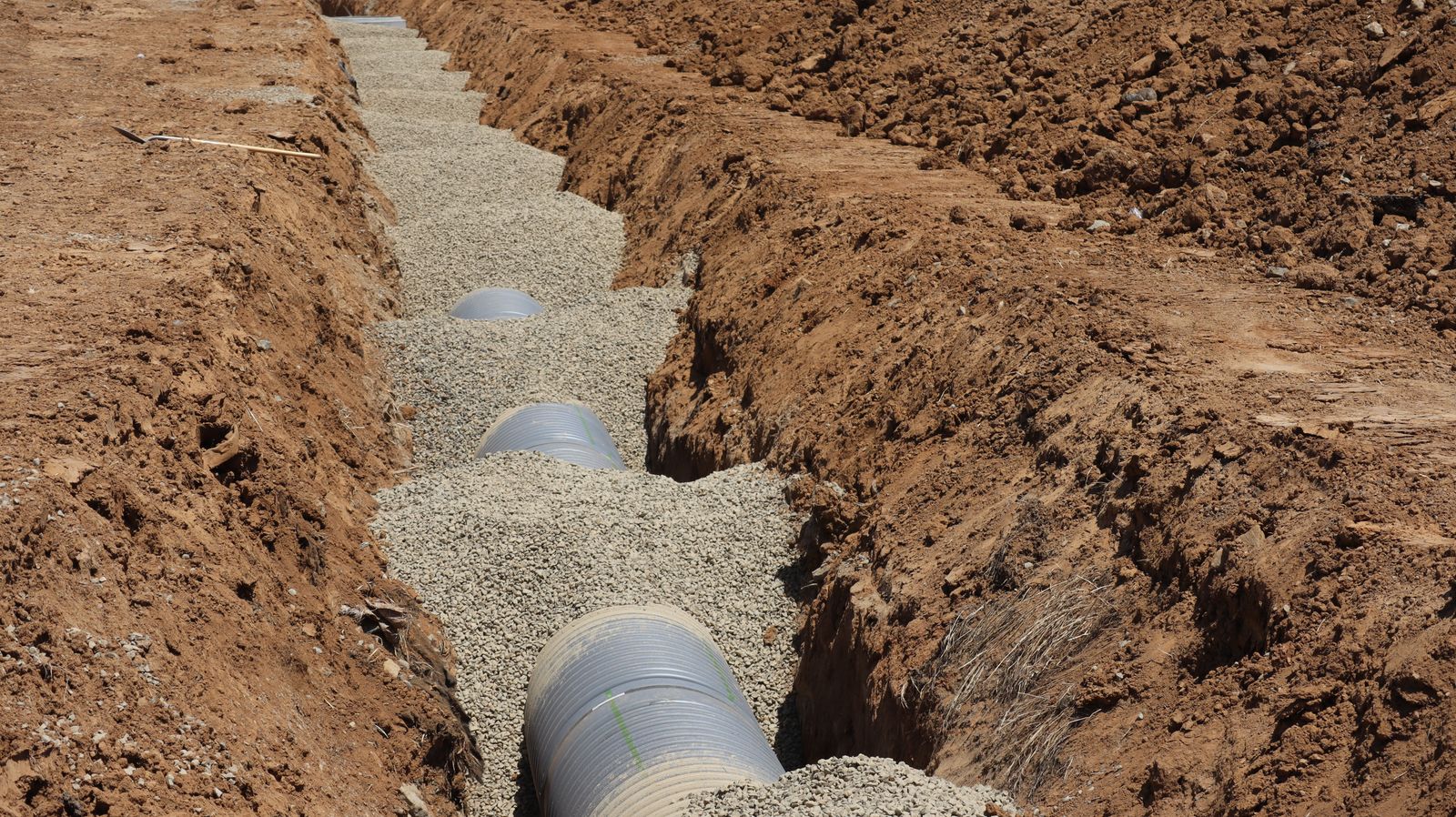
Symptoms that mean the bed is done
These point at the leaching bed, not the tank:
- Effluent surfacing — wet patches, greyish water or visible sewage over or downhill of the bed. This is a failed system by definition, and it's a health and water-quality issue, not a nuisance
- Ground that stays saturated or spongy over the bed in dry weather
- A strip of unusually lush, dark green grass following the shape of the bed — the classic tell, and it means effluent is fertilizing the surface instead of being absorbed below
- Backups that return within weeks of a pump-out
- Persistent sewage odours outdoors, especially in warm or humid weather
- Needing to pump far more often than every 2–5 years just to keep the house functioning
A bed in that condition doesn't heal. The soil's capacity to absorb has been consumed, and the fix is a leaching bed replacement or a full new system. Around the lakes, this is also exactly what a mandatory re-inspection catches — and once there's a compliance letter, the timeline stops being yours.
The repeat-pumping money trap
This is the pattern worth naming, because a lot of people around Orillia are living in it right now. The bed fails. The homeowner doesn't want a $30,000 project. So they pump — every four months, then every two, then monthly through the summer when the cottage is full.
Do the arithmetic over three or four years and the number gets ugly. Thousands of dollars, spent on a service that buys no equity, fixes nothing and leaves the property exactly as unsaleable as it was. Meanwhile three other things are happening: construction costs keep drifting upward, raw effluent is still reaching the ground and in shoreline areas the lake, and the property is one re-inspection letter away from a hard deadline.
The replacement was always coming. Repeat pumping doesn't cancel it — it just makes you pay for it twice.
When a repair really is the answer
None of this means every problem is a $30,000 problem. If the bed is still healthy and a component has failed, a genuine repair fixes the symptom for a small fraction of a replacement:
- Inlet or outlet baffle — broken, corroded or missing. A failed outlet baffle lets scum escape to the bed, which is how healthy beds get killed early. Replacing it is cheap; leaving it is not
- Effluent pump or float switch — on pumped systems, a dead pump or stuck float mimics a total failure and is a straightforward swap
- Distribution box — cracked, tilted or plugged D-boxes send all the flow into one trench and drown it while the rest of the bed sits idle. Re-levelling or replacing the box can restore even distribution
- Crushed, frozen or root-invaded pipe between house and tank, or tank and bed
- Tank lid, risers or a cracked tank — a failing steel tank is its own hazard and usually gets replaced regardless
The diagnostic question never changes: is the bed still accepting effluent? If yes, repair the component and carry on. If no, the bed is the project, and everything else is delay.
What replacement costs, so you can compare honestly
Around Orillia, a conventional tank-and-bed system runs $18,000–$40,000 installed. Where soil, shallow bedrock or a high water table rule out a conventional bed, a raised or fill bed runs $35,000–$50,000, and an advanced treatment unit $40,000–$60,000+ on tight or shoreline-constrained lots. Replacing an existing system typically lands 10–20% above a new install, because the old system has to be decommissioned and the crew is working around a finished property. Full ranges are on our cost page.
One planning note: the excavation season runs roughly April to November. If your bed is failing now, the design, the permit and the schedule all have to fit inside that window — which is a good argument for finding out what you're dealing with early rather than pumping your way to next October.
Been pumped more than once in the last year? That's your answer, and it's worth getting a real number attached to it. Use the free quote form to book a site assessment — you'll get a written quote covering the design, the permit and the final inspection, so you can compare it honestly against what you're already spending on pump-outs.